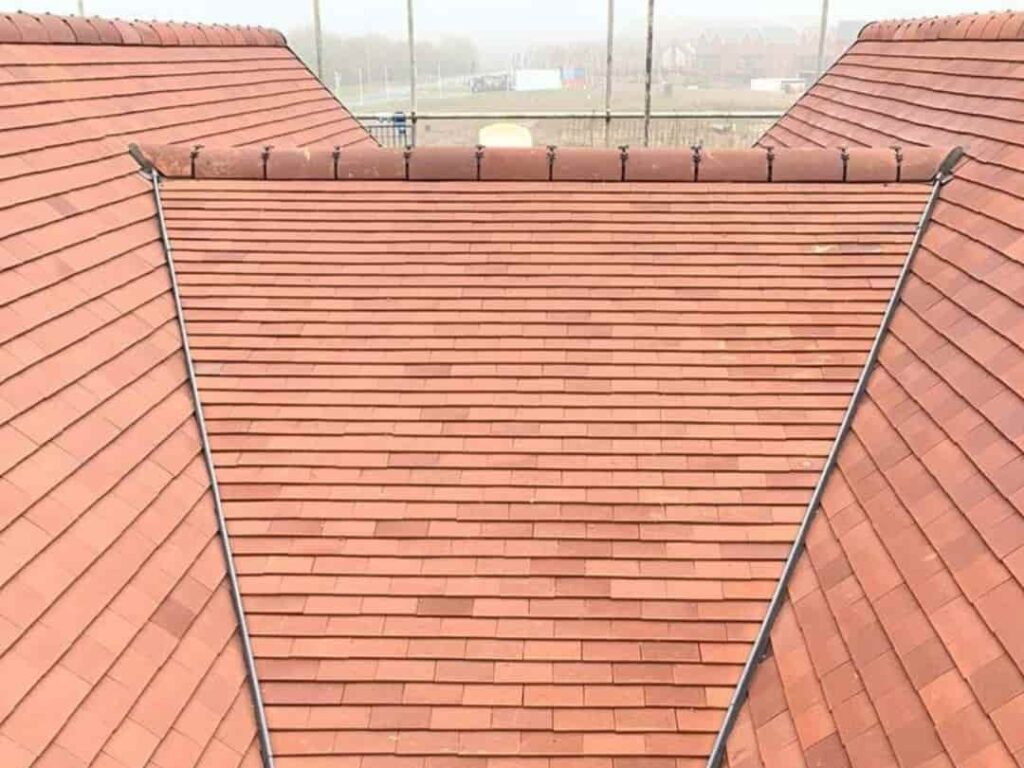
A leaking or damaged roof does not automatically need complete replacement. Many isolated faults can be repaired successfully when the surrounding materials and supporting structure remain sound. However, there comes a point when repeated local repairs no longer address the condition of the wider roofing system.
The decision should be based on evidence rather than the roof’s age or appearance alone. A professional assessment can establish whether deterioration is confined to one area or affects enough of the covering, underlay, battens and roofline to make a new roof the more dependable option.
Signs That a Complete Roof Replacement May Be Needed
Problems Are Developing Across Several Areas
A localised repair is often appropriate when damage is limited to a small section. The situation changes when leaks, slipped tiles or deteriorated materials appear across several roof slopes.
Multiple unrelated defects may indicate that the roofing system is reaching a stage of general decline. Repairing one area may stop an immediate problem without preventing another section from failing soon afterwards.
Repairs Are Becoming Increasingly Frequent
A roof that needs occasional maintenance is not necessarily failing. Concern is more justified when repairs are required repeatedly or recently completed work is followed by problems elsewhere.
A growing pattern of intervention may suggest that tiles, fixings, mortar and underlay are deteriorating at a similar rate. At this point, the complete roof should be assessed rather than continuing to treat each symptom separately.
Tiles or Slates Are Widely Deteriorated
Individual cracked or slipped coverings can usually be replaced. Widespread deterioration is more difficult to address through local repairs.
Warning signs include:
- Numerous cracked or broken tiles
- Repeated slipping in different areas
- Flaking or crumbling surfaces
- Large sections with poor alignment
- Worn fixings no longer holding materials securely
- Coverings that fracture easily during repair work
- Extensive patching using mismatched materials
The condition of the surrounding coverings matters because repairs rely on them being strong enough to remain in place.
The Roofing Underlay Has Failed
Underlay provides secondary protection beneath the outer covering. Older material can become brittle, torn or sagging, allowing water to reach battens and roof timbers more easily.
If deterioration is confined to one accessible section, a local repair may remain possible. Widespread underlay failure generally requires a substantial part of the roof covering to be lifted. In such circumstances, complete renewal may provide a more coherent result.
Battens Are Decaying or Losing Strength
Roofing battens support tiles or slates and help maintain their alignment. Persistent moisture can cause them to soften, decay or lose the strength needed to hold fixings.
A small damaged section may be replaced locally. If weakened battens extend across several areas, removing the roof covering may be necessary to access and renew them properly.
The Roofline Is Sagging or Distorted
Visible dips, waves or changes in the roofline should be professionally investigated. They may relate to displaced materials, weakened battens or movement in the supporting structure.
Distortion does not always mean the entire roof needs replacing, but it cannot be assessed reliably from appearance alone. The cause and extent of the movement must be established before deciding whether repair remains appropriate.
Water Is Entering Through Multiple Points
One damp patch can result from a single defect. Water entering through several unrelated locations may indicate broader deterioration in the roof covering, junctions or underlay.
Internal symptoms might include:
- Damp patches in different rooms
- Staining across several ceiling areas
- Moisture around more than one roof junction
- Wet insulation in multiple locations
- Repeated leaks during different weather conditions
Water can travel before becoming visible, so these signs require careful investigation to determine whether they share one source or represent separate failures.
Flashing, Valleys and Roof Junctions Are Widely Worn
Chimneys, valleys, roof windows and changes in roof level contain vulnerable junctions. A single defective section of flashing can often be repaired, but widespread failure across multiple details may point to an ageing roofing system.
Replacing the covering creates an opportunity to renew these connected weatherproofing components together rather than joining new repairs to increasingly unreliable surrounding materials.
Previous Patching Has Created an Uneven Roof
Many older roofs contain repairs completed at different times using different materials and methods. These patches may remain serviceable individually, but numerous alterations can make the roof increasingly difficult to maintain consistently.
Uneven overlaps, varied tile profiles and repeated sealant repairs can interfere with drainage and make future defects harder to trace. A professional roofer can determine whether further repair will integrate reliably with the existing work.
The Roof Can No Longer Be Repaired Without Disturbing Sound Areas
Local repairs depend on being able to lift or move neighbouring materials without causing additional damage. When surrounding tiles have become fragile, accessing one defect may break several otherwise intact coverings.
This does not automatically require replacement, but it is an important practical consideration. The condition of the entire roof must be weighed against the likelihood that further intervention will create additional repair needs.
When Repair May Still Be Suitable
Complete replacement should not be recommended simply because a roof is old or has developed one leak. Repair may remain the better option when:
- The defect is clearly localised
- Most of the covering remains secure
- Underlay and battens are generally sound
- The supporting structure is stable
- Suitable replacement materials can be fitted
- Previous repairs have performed reliably
- Water ingress has not spread widely
A detailed inspection is needed to confirm these conditions.
What a Professional Roof Assessment Should Establish
Before recommending a new roof, the inspection should consider:
- The condition of tiles or slates
- Fixings, battens and underlay
- Accessible structural timbers
- Ridges, hips and verges
- Chimneys, flashing and valleys
- Guttering and roof-edge components
- The number and location of previous repairs
- Internal evidence of moisture
- Whether local work can integrate with the existing roof
Sheppey Roofing evaluates the complete system before advising whether targeted repair or full replacement is the more suitable response.
Conclusion
A home may need a completely new roof when defects are widespread, repairs are becoming frequent, underlay or battens have deteriorated, or several areas are allowing water to enter. No single warning sign confirms the need for replacement; the decision depends on how the roof performs as a complete system.
If your roof in Sheppey, Kent, is developing repeated or widespread problems, contact Sheppey Roofing to arrange a professional assessment. A clear evaluation can determine whether repair remains practical or whether replacement would provide a more dependable solution.
Call us on: 01795 507296
Click here to find out more about Sheppey Roofing
Click here to complete our contact form and see how we can help with your roofing needs